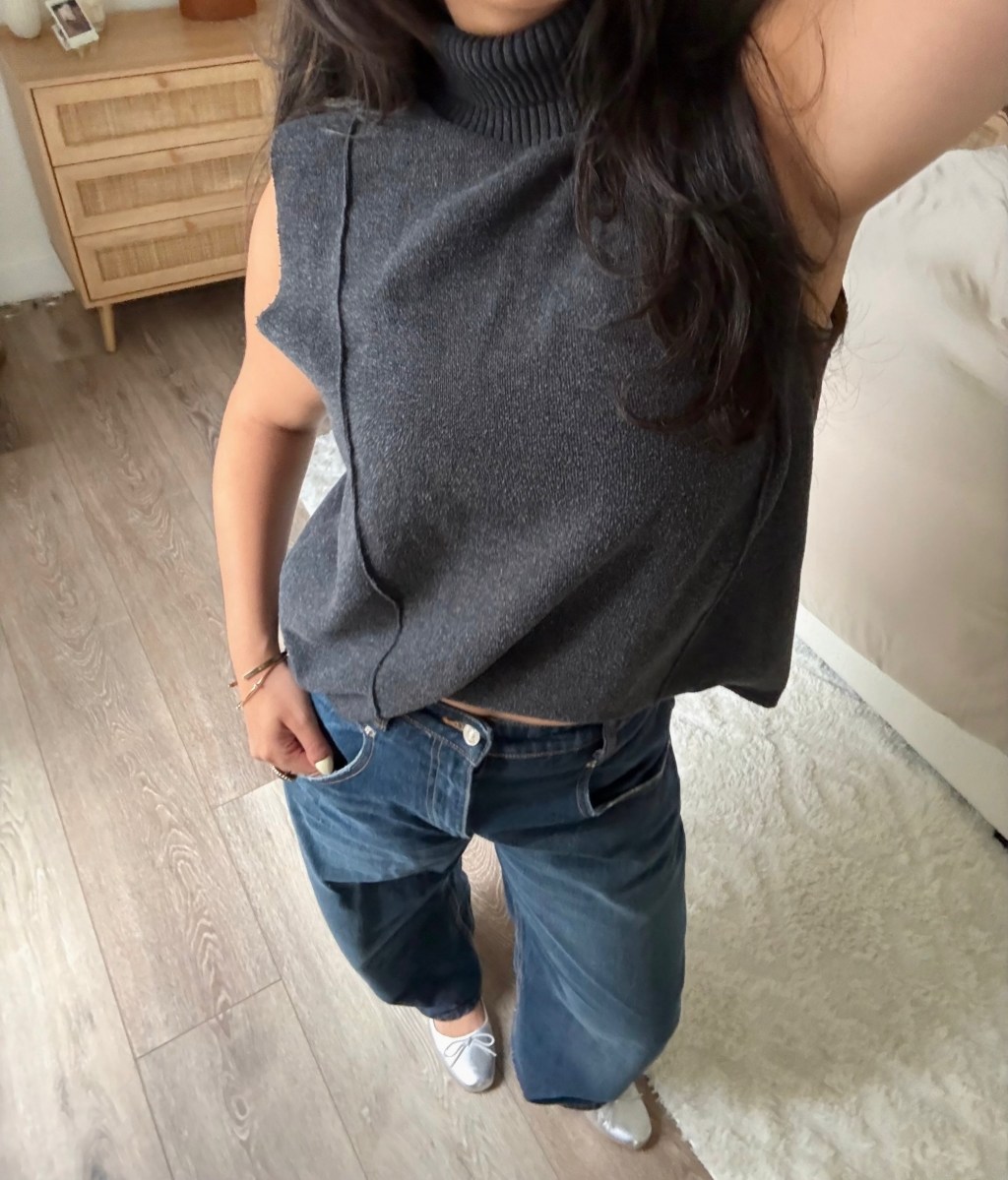
“I have nothing to wear.”
This statement continues to be a constant lie that I and many others tell on a daily basis, almost instinctively, as we stare into our overflowing closets. My immediate reaction to this thought is always to solve it with my credit card; by the end of it, I’m more often than not left with another item or two that will be neglected the next time I go out, as I continue this never-ending cycle of over-consumption. The older I’ve become, the more weary I’ve been of what I’m actually spending my money on to avoid the anxiety I have about running out of room in my wardrobe.
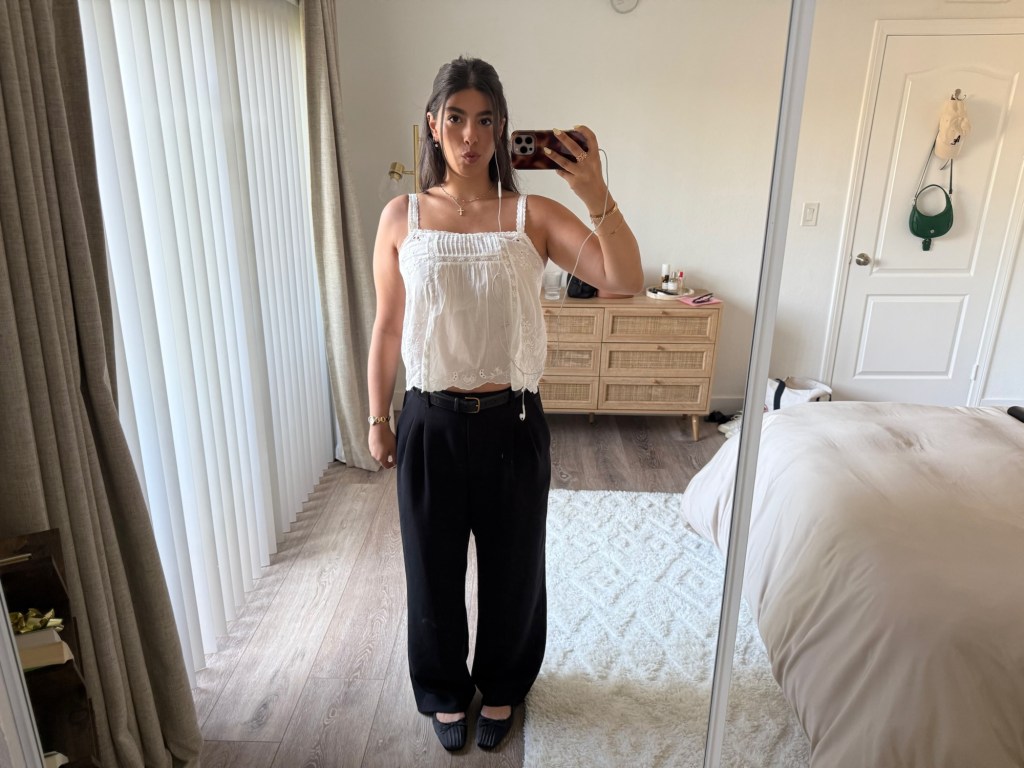
I saw a video on my TikTok feed, ironically enough, discussing how outfit repetition is more indicative of style than wearing something entirely new every time you step out of the house. This statement sparked both internal conversations and a sense of hope. Our ability to find and showcase our individualized style has become nearly impossible as social media has convinced us that we can’t be caught wearing anything out of style or that we’ve been seen in before.
The truth is, being confident in styling the solid pieces you own and love proves that you buy with intentionality, not just based on what others tell you is trending or stylish. That being said, I’ve noticed how many people who claim to love “fashion” don’t know anything about the industry.
They don’t love fashion. They love shopping.
Understanding the fashion industry goes hand-in-hand with understanding art, history, and even politics. Every collection has its inspiration and message rooted in the context of the time period we are currently living in, have lived in, or may eventually live in. To be truly interested and, more importantly, educated in fashion, we cannot neglect these crucial factors.
In 2006, Alexander McQueen debuted The Widows of Culloden, a collection that perfectly depicts why context matters in fashion. Presented at the Palais Omnisports de Paris-Bercy in Paris, it was a breathtaking showcase of sweeping tartan skirts, dramatic silhouettes, and flawless tailoring. But what made it unforgettable was the history woven into every look. McQueen was referencing the aftermath of the Battle of Culloden in 1746, a violent moment in Scottish history that led to the suppression of Highland culture.

The clothes carried a sense of grief, resilience, and pride, turning the fabric into something that felt more like a living memorial than just a runway. The finale, where Kate Moss appeared as a life-sized hologram in a flowing gown, created the visual of a ghost rising before the audience. The entirety of the collection reflected on loss and how the past lingers with us as each piece carries those stories. That is the difference between simply liking clothes and truly understanding fashion. The meaning behind a garment can be just as important as the garment itself.
How does this relate to outfit repetition? Simple. Buying a piece with significant meaning behind it, whether that be a rich historical context or pure admiration for the garment’s construction, means we should value it enough not to overshadow it with a million other pieces that we will likely reach for instead. In a 2020 article in The Guardian titled “Why Owning Fewer Clothes Makes You a Better Dresser”, we see how the concept of “capsule wardrobes” had taken over the fashion world five years ago. Outfit repeating, once more, “has now become a badge of honour” as the maximalism we’ve been seeing in trends, especially over the past three years, becomes overwhelming and unappealing to both shoppers and fashion lovers.
Pieces like McQueen’s 2006 collection are obviously not sitting in mine or most peoples closets, but understanding why and how the specific cut of shirt you just purchased was popularized or pushed into mainstream fashion will allow you to appreciate it on a whole new level, perhaps convincing you to reach for it instead of running back to your laptop to look for something to replace it. I’ll admit that suggesting everyone should conduct historical research before buying clothes is ridiculous, but on a broader scale, if you care about the industry as much as you claim to, being aware is non-negotiable.
 opinionated.
Leave a comment